Day 3: Hot Springs Connoisseur
Day 3: Keough’s Hot Springs, 7 miles south of Bishop just off Highway 395, Eastern Sierra, California
Someone recently tried to convince me that I am a wine connoisseur. No—not yet anyway! A connoisseur to me means someone experienced, knowledgeable, an expert of sorts. I would admit to being a connoisseur of life, of exceptional places, and a few others things..but not yet wine.
Hot springs of the American west? Of that I am a connoisseur. I have tasted, experienced, evaluated, judged, tested the waters, and the soul of hot springs all over the western US and beyond—California, Nevada, Oregon, Utah, Wyoming, Colorado, New Mexico, Arizona, Mexico, even Peru. Maybe even Washington, I can’t remember. I have soaked in the desert, the mountains, the redwoods, the coast, along the interstate, and a day or two hike into the wilderness. A friend of mine from high school, now a geothermal hydrologist, at one of our high school reunions tried to impress me with knowledge of this or that obscure soak—but I knew them all, and some he didn’t.
Keough’s Hot Springs is not in my Top 10. Probably not in my Top 20.
1) They are commercial—they charge $8 for adults and $4 for kids to allow you to soak in a large cement 3′ deep pool kept at 104 degrees or to play in a larger, deeper pool kept just below body temperature.
2) They are commercial—you are soaking in a cement pool in your swimsuit.
3) You have to wear a swimsuit and you are surrounded by people, a fence and cement.
You can soak (but not camp) nearby on the run-off on LA’s DW&P land under the power lines but the last two times I’ve been there so have a few unsavory characters and broken glass, and now that I have a child, I am more inclined to make different choices.
On the positive side, the pools are chlorine free because the water flows through the pool so quickly chemicals are unnecessary (600 gallons of 127 degree water per minute!) and it’s hot (HOT! 127 degrees!) mineral water fed springs, and much of the picnic and camping area is surrounded by large green soft grass. AHHhhh , grass. Bare feet. It will be an additional $26 for us to stay here but that’s ok. We’ll take the grass and the views of the White Mountains and the sage and the quiet.
The pool is open 10-8pm most days and 10-9pm on Friday and Saturdays; $8 for adults and $4 for kids, even if you’re camping there. Ignore the snotty high school girls who work there.
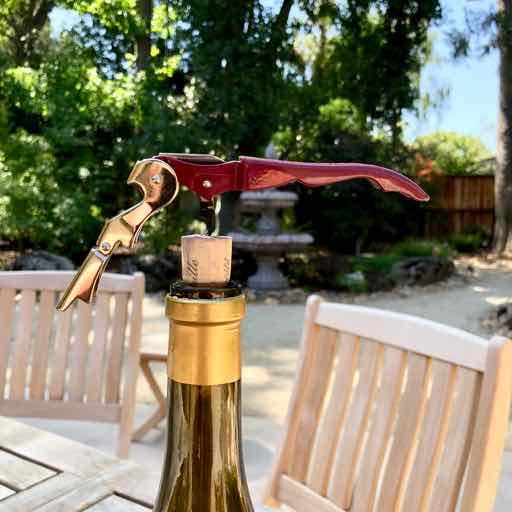
After playing in the pool and getting nice and clean, we barbequed chicken which we bought at Carroll’s Market in Big Pine. The RBJ 2000 Theologicum, a blend of grenache and moutverde which we cooled off in a bucket of cold water, went well with the chicken and mushroom tortellina pasta with zuccini we had as a side. It was even better after we put the boy to bed, dipped the bucket in the hot creek to soak our feet in, and exchanged foot massages!
Like the 2001, the 2000 RBJ theologicum is nicely balanced…not too fruity or heavy, just a super smooth enjoyable, drinkable wine much like the 2001 (but given a choice I prefer the 2001). I am certainly becoming a fan of Chris Ringland wines!
And just in case you’re wondering, Bagby Hot Springs– near Portland Oregon, on the flanks of Mount Hood, in an old growth forest, where you soak in a cedar log–Bagby Hot Springs may be my favorite soak yet…although I am very very fond of Guadelupe Hot Springs near the Laguna Salada in Baja Mexico…and Saline Valley near Death Valley will always have a special place in my heart…This is obviously the start of a different post!
Cali-fire-nation
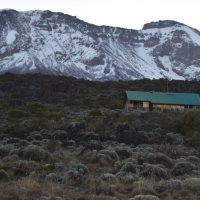
The views from the White Mountains across the hot dry Owen’s Valley to the Sierra typically overwhelm even the most jaded traveler with superlatives.
On our recent trip to the Eastern Sierra, however, our views came and went with the winds and fires (some 1400 burning in the state). We could smell the smoke in the southern part of the valley near the Kennedy Meadow Paiute fire, and friends who’d just been up to Cottonwood Pass had said it was smoky at times so we were prepared.
On Day 1 and 2 of our trip, the smoke wasn’t too bad but on Day 3, when we hung out in the Owen’s Valley for the afternoon and the evening, we could barely see the sierra, we didn’t like breathing in the smoky air, and we were grateful we weren’t hiking in the back country.
When I backpacked the California section of the PCT in the 80s, we left the trail near Yosemite and hiked back to Mammoth since we were unsure whether there was fire ahead. Turned out the smoke the clouded our views and destroyed our lungs came from a fire in Ojai, but that the trail from Glen Aulin to Sonora Pass was closed anyway so we had to take a week off.
In California, the smoke from coastal fires gets swept up high and east; smoke from northern fires can blow south, and southern ones north. You never know where the smoke is coming from.
Here are some pictures from the recent Califire-nation more: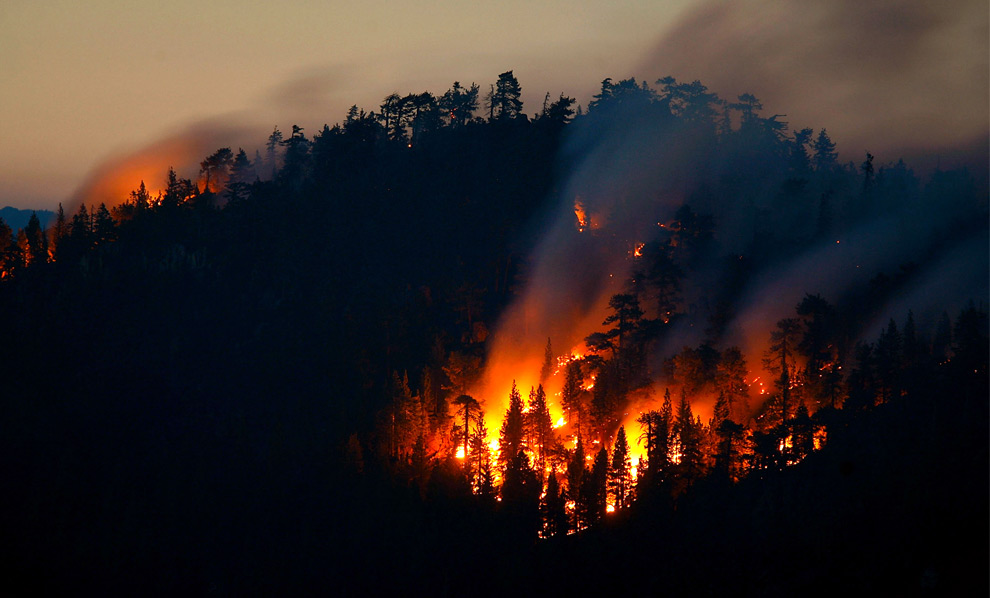
Dan Philips Grateful Palate & my high altitude dreamin’
When I was in college, my environmental lit and writing class taught by Page Stegner (Wallace Stegner’s son) went on a rafting trip through the goosenecks on the San Juan River in the American Southwest. I traveled there with other students in climber Mike Carville’s brand new VW pop-up Westfalia campervan, and we stopped on the way at his dad’s place at Northstar Lake Tahoe which he was developing. That night I had a very vivid and strange dream which included walking in a leather mini-skirt along a trail in the redwoods; it was night but there was a raven and a glowing banana slug talking and walking with me. In the morning, over coffee, Read more…
POEM: mountain twilight breath
breathe in joy
days light creeps up
White Mountains to sky pink clouds
saved breath of earth
crosses the belly of the valley
rushes up sage
wrestles with cottonwoods
redwings robins ride to roost
creek roars past
3 pillars of an old house rise
breathe out peace
I wrote this poem for last week’s readwritepoem prompt while camping at Keough Hot Springs at about 4500′ on the slope of the Sierra while gazing at the White Mountains where we’d camped the previous nights (see posts below for details on bristlecones, camping, and wine!)
DAY 1
July 5, White Mountains, Inyo National Forest, Eastern California served with
porkloin, grilled corn, and 2005 Marquis Philips “Roogle” shiraz, chilled briefly in a bucket of snow
At 10,000’, we’ve left paved road and the Schulman Grove of the Bristlecone Pines in the White Mountains of California’s Inyo National Forest to climb steadily up a well maintained dirt and gravel road. Sagebrush, a calf high shrub, dots the hillsides with soft green, and sends up gray green flower spikes which will bloom yellow by late August. Abundant coral red Indian paintbrush bracts burst in color between the sage while purple lupine lines the road and sends wafts of grape through the window to mingle with whiffs of sage.
We’re headed for the Patriarch Grove at over 11,000’ where, we have been warned a large snowpatch blocks the road requiring an extra mile hike-in to see the twisted, bony trees scatter about the dolomite hillside.
Bristlecones are called the “ancient ones” because, as far as trees go, they outlive everything else by hundreds of years. Many have lived thousands of years. Creosote, a head high desert shrub found in the Mojave just south and thousands of feet down, live this long as well but there’s some debate whether an old individual is the same plant or a clone.
Regardless, there is something about these desert climes that keep these trees and shrubs hanging around for generations longer than anything or anywhere else.
I don’t blame the bristlecones for sticking around—this is one of my favorite places on earth, and I am sharing it for the first time with my son and my husband, both of whom are eagerly peering out the windows as we wind our way up the mountain to the Patriarch Grove, scoping out possible camping sites along the way. From previous trips, I know there are a few right on the ridge of the range, sites where we will be able to peer down into the Owen’s Valley to see the lights of Bishop—and even more to my taste, to see the peaks of the Sierra, adorned still with white in avalanche shoots, the glaciers in the Palisades as well as remaining patches in assorted places.
We still scoff however at the possibility of snow on this side of the valley. It is HOT—in the 90s here at 11,000’ and climbing—how could there be a patch of snow still on the road which will detain us from arriving at our goal?
But as we near, we do find the road closed, with a weak patch of snow, and there, yes, a large one, large enough to sustain an extensive snowball fight by a group of a dozen or so teens and their families up for the day from Bishop.
We make sandwiches while others BBQ hot dogs. The terrain feels like the moon—white hillsides of dolomite are very otherworldly, even though we are surrounded by vehicles and people. Bristlecones live just up the hill from us too—stark, bizarrely shaped and formed by winter ice wind whipped to splinter off the bark, stripping off the cambium layer which sustains its growth, leaving just enough life for it to preserve another year.
The 4 year old is ecstatic and fascinated by the snowball fight. He lives yearlong on the coast, and even though we went on three ski trips this year, he loves and is entranced by snow; he is anxious for us to hurry down and join in on the snowball fight. He doesn’t quite understand the logistics as well as the social dance involved—these are teens from Bishop we don’t know and—these are TEENS. We are old enough to be their parents. We know they don’t want us around. But we stop at the snow patch, watch the antics, exchange some snowballs, and then, when the teens move on, we do too.
We don’t get very far when the 4 year old finds a patch of snow in a gully and insists on going up there. Go right ahead, we encourage him; he gets quite a ways up before he turns around and joins us. We continue on, but by this time in the afternoon, he’s about out of steam so when he suggests we head back, we do. It’s time to find a campsite. We’ll save these bristlecones for another day and see the Schulman Grove trees tomorrow. First, we use a sauce pan to scoop snow into ziplock bags and a bucket to assist our rapidly depleting ice.
Heading back toward Shulman Grove, we descend steeply on the short section of paved road, then climb back up to the ridge where we inspect then reject one campsite—too exposed, but great views—and continue on until we find the “perfect”site—a bit more off the road than others, a few trees, and awesome views down and across the valley. Plenty of flat space for the van and even a makeshift whiffle ball diamond; no bugs, not too hot, the sliding door opens out west toward the sierra, the windshield faces the trees—limberpines and bristlecones, but not likely much older than a few hundred years. Certainly not “ancient ones” but of the same stock! The oldest ones are only found in these two groves. A number of very old ones grow in Nevada at Great Basin National Park, and the oldest one ever found lived there until the 1950s when a scientist named Curry cut it down to figure out its age when his coring failed.
Under the shade of a bristlecone, I make us a table using two found fallen tree branches—the 4×4 piece of plywood we keep in the back of the van balances on them with the help of a flat rock. This is where we set up the portable propane BBQ. While the boys practice hitting the whiffle ball and running bases, I put a bottle of 2005 Marquis Philips shiraz in the snow in the bucket; the label has a “Roogle”—a mythical eagle/kangaroo creature seems appropriate this July 4 weekend.
Time to relax, enjoy the afternoon, and break into a new book –Barbara Henning’s You, Me and the Insects (2006 Spuyten Duvil) about her stay in Mysore India to study yoga and life. I am instantly present deeply in two places—getting camp set up here in the White Mountains, getting her place set up in India, preparing food, distracted occasionally by family by memory by things to do. Her book is full of observations, almost like a meditation—I see my mind thinking about this, I am now observing that. It’s vivid and masterful. I’m in heaven.
And it keeps getting better! The Big Monkey BBQs corn, then a very peppery porkloin while I stir fry squash. The Roogle is incredible, its rich, vivid flavor, and intense fruitiness standing up to and balancing the peppery porkloin.
“You have a shiraz mustache!” laughs my husband and my child joins in.
The Marquis Philips 2005 is a shiraz to cut your teeth on, one that sticks to your ribs and your upper lip. The 15.9 alcohol plus the altitude socks it to me quick; the wine is smooth but edgy at the same time—just like our campsite!
The smoke from recent fires light the clouds a deep blood orange. The day cools. The child sleeps. We sit in campchairs, watch the slender moon set, feel close to the stars. A day well done.
GLOW some summer fun in LA CA & beyond

This Summer The DO LAB, producers of Lightening in a Bottle, are once again taking the show on the road, to the Midwest, the East Coast, and even Europe. So if you’ve been waiting for the Do LaB to come to a festival at a town near you, here’s where you’ll find them:
www.apwfestival.com August 8th-10th ~ All Points West (New York)
www.virginfestival.com  August 29th-31st ~ Electric Picnic (Ireland)
August 8th-10th ~ Virgin Festival (Baltimore)
www.electricpicnic.ie
CLOSER TO LA, GLOW
in and around Santa Monica’s Pier
Saturday July 19, 2008 7pm-7am FREE 10pm KCRW DJ Garth Trinidad (a favorite!!)

CLOSER TO LA, GLOW
in and around Santa Monica’s Pier
Saturday July 19, 2008 7pm-7am FREE 10pm KCRW DJ Garth Trinidad (a favorite!!)
Glow will fill the hours between dusk to dawn with compelling, enchanting and effervescent sights and sounds situated in spaces and times that expand possibilities for where, how and when the public experiences contemporary art.
With the historic Santa Monica Pier and adjacent world-famous Santa Monica Beach as their space, artists were commissioned to create unique and inviting works of art that welcome the public to be both audience and actor for twelve celebratory hours. Inspired by the wildly successful Nuit Blanche in Paris, Glow takes its spirit from the fabled grunion that live in local waters and come ashore several times a year to spawn in the sand creating a momentary sensation of iridescence.

So yes I had my meeting and yes I think it went well and yes I will write about it sometime…
But now we are packing up the van and heading out for the Eastern Sierra–Fourth of July in Independence California population small, home of the Winnedumah (est 1924) and the Road Kill Cafe, the best little French restaurant in Ecotopia!
You will recognize me by the shirt above (possibly the comfiest in the universe) or the bird tree “vote the environment” Patagonia eco shirt (from my solstice post) or this one which I got off the back of friend Dave Staeheli just before he climbed into bed in our guest room:  :
:
Plus of course the Patagonia skirt I wrote about a week or so ago…not to mention the shiraz mustache and the pink highlights in my hair!
Looks like I’ll be missing the Poetry Train and READWRITEPOEM this week–sorry folks! I am out in the Sierra wilderness singing my heart out to the stars! If I get a chance, i will post and poem and join you!
PS My next shirt purchase will be by Paul Squire (aka GingaTao). If you can’t read it here, the original poem can be found on the blog “hello,” http://gingatao.wordpress.com/2008/06/25/some-things-are-not-ghosts/

YES!!
After days and days of waiting waiting waiting, I actually have a meeting scheduled with Dan the Man, the Grateful Palate himself, here briefly from Australia!! Not exactly sure where I will be going next–or when–but I am optimistic! More waiting in stores now! Watch for an upcoming post: a meeting with the Grateful Palate!
Hmmn, really need to do something about that CV (see post below…) How do I turn that monster into a resume??? A little research and a talk with Annie’s friend HR expert Joan Morton suggests:
* 2 pages (max–I have seen CVs that run into the double digits!)
* list 4-5 accomplishments
1) Art Predator newspaper column, radio show, blog;
2) grant writing: large and small from several hundred to several thousand to multiyear, multi-bill mega grants;
3) teaching: yoga, mountaineering, college undergrad and grad, education, environmental studies, writing, literature, creative writing, critical thinking;
4) grant facilitator, program director, marketing, recruitment, website & brochure design, promotional video;
5) published poet/exhibiting artist
* summarize, summarize, summarize: get the career into one 3-5 line sentence (35 words!)
sheesh
* determine 3-5 key attributes
* find 3 references
That shouldn’t be too hard! (any volunteers?)
Turning my CV into a resume is not going to be easy–like transforming a novel into a sitcom! and I have to figure out what to wear!! I don’t think my Patagonia skirt and t-shirt and TEVAs will cut it!
wish me luck!
Obviously, Matt Harding enjoys his “job”–traveling the world, dancing, blogging…(see the post below). But most people, when you mention work, turn up their noses. Who wants to work?
I remember visiting Jackie Kilpatrick a professor of literature at CSUCI. We’d been in grad school together at Uncle Charley’s Summer Camp, we’d taught a college core course together, and now here she was a tenured professor in American Lit, a dean even, in her office, working one day when I was giving an artist friend a tour. “How much do you work?” my friend asked. Jackie started describing her classes, her projects, plays and books she was reviewing…”It sounds like you work all the time.”
She smiled and agreed. “I love it,” she said.
Driving back to Art City, I asked my friend, “What’s work? When you’re painting all day and night, or creating art, is it work? Do you mind?” I know as a writer or when I’ve done art projects or broadsides for ART/LIFE, when I am working on a project whether it be painting or putting in a garden or organizing an event, it might be considered work, but it’s not–it’s work I choose to do, that I enjoy doing. I am always thinking about projects I want to do–big ones like adding on a home office or retiling the bathroom, or small ones like painting a bookcase or moving furniture around, working on this blog, poetry projects, book projects. It’s like popcorn in my brain, so many ideas firing, which one to eat first?
My friend Dave Staeheli climbs mountains for a living, specifically Denali, turns wood as an artist, and does finish carpentry. He’s visiting us right now, after two successful trips this season up the big mountain. So I asked him about work. He brought up the idea of avocation and vocation. Vocation is a job, a calling; avocation is a volunteer project, something you do that you love, that can become a vocation. He went from having an avocation as a climber and it became a vocation–a job where he gets paid to do something he loves. What really matters, we decided, is that you choose the right job. An avocation is what you want to do and whether you make money or not doesn’t matter; if it does become a job, it can destroy your avocation although that can be a pleasant way to make an income.
I told my yoga teacher Bryan Legere I was looking for a fulltime job, looking to do something new. “I’m sorry,” he responded.
“Why?” I asked. He admitted that it seemed most people with fulltime jobs are unhappy.
“But it doesn’t have to be that way,” I responded. “Look at you–you have a fulltime job–you teach yoga 2-3 classes a day, 3 or more days a week, with weekend intensives, plus your own practice doing yoga hours everyday–is that work? Plus you have your businesses, the Great Yoga Wall, and the Sunrider. You’re working all the time. But it’s different because you’re doing what you want to do, what interests you what challenges you. That’s the kind of work I want to find. Work that I can sink my teeth into. Work where I will learn and where almost every day offers a different challenge. Where I can write, think and create, make.”
My Holy Grail: looking for work that’s an avocation, a vocation, a calling. Not just a job.
We should feel good about the work we do. But most of us don’t. Most of us find work anaesthetizing–it puts us to sleep, it deadens us and turns us into consumers, too tired to cook, to grow food, to make art, to learn to do for ourselves. I want –no, I demand!–an aesthetic experience. You should too. Unhappy with your work? Do something about it! Tell me about it–your work, your search, your vocation, your avocation! The revolution will not be televised!