National Poetry Month 2020: April 17 — Shiny Fish
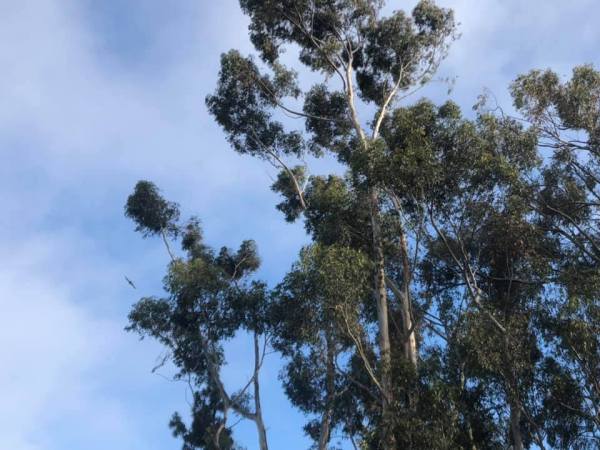
Eucalyptus leaves shimmer in morning wind: a school of shiny fish.
American Beat Poet Alan Ginsberg came up with the idea of American Sentences: an American sentence is like a haiku in that it has 17 syllables but it’s not three lines in a stanza but one line. As a haiku offers an image that generates emotion and conveys a moment in time, the best Sentences do more than just offer a sentence in 17 syllables. I learned about American Sentences from Paul E. Nelson who I met at the Taos Poetry Circus in 2000; my friend who turned me on to the Baudelaire quote above I also met at Taos. According to Paul, the key to writing a good American Sentence comes from Ginsberg’s notion that poets are people who notice what they notice. He has been writing one a day since January 1, 2001. Learn more about American Sentences and how to write good ones from Paul here.
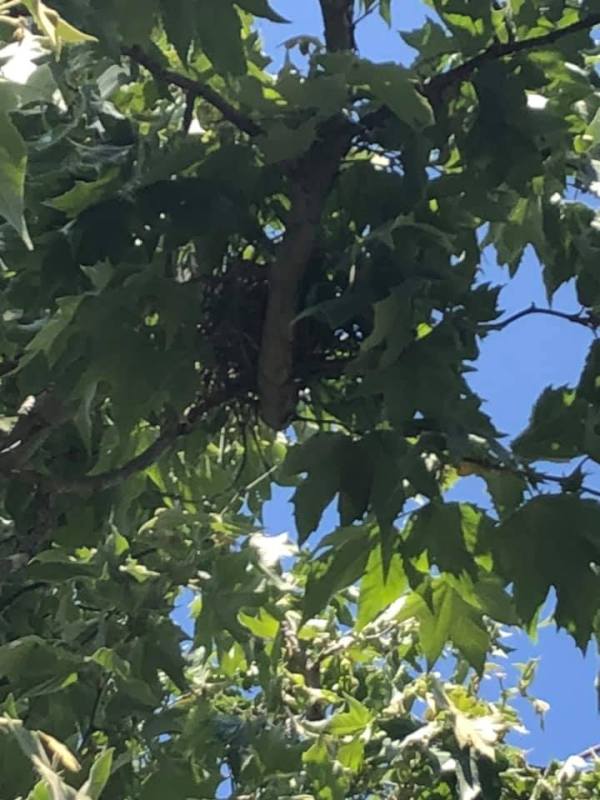
Do you see the nest?
Prayers yes but we combat COVID with compassion, constructive acts.
Today’s American Sentence is inspired by an essay composed by the Dalai Lama and published on April 14, 2020 in Newsweek and on Facebook where I saw it. The Dalai Lama points out that just praying aren’t enough to fight the Covid-19 pandemic; instead, we need to face the challenge with compassion and constructive acts.
He means, I think, that with compassion, to combat COVID we must get out there AND DO SOMETHING. Don’t just stay slumped on the couch, as tempting as that might be.
Grow something; notice what’s happening in the natural world by you!
I’ve seen a pair of scrub jays at my feeder and perched on the top of my sycamore tree. Today the pair of jays were fending off a pair of ravens (maybe crows?). I went out to disrupt the action and saw above my head the nest the jays had been defending.
I don’t know the fate of the lives within the nest yet, but I do know the jay is back on the regular spot. And now I know why.
American Beat Poet Alan Ginsberg came up with the idea of American Sentences: an American sentence is like a haiku in that it has 17 syllables but it’s not three lines in a stanza but one line. As a haiku offers an image that generates emotion and conveys a moment in time, the best Sentences do more than just offer a sentence in 17 syllables. I learned about American Sentences from Paul E. Nelson who I met at the Taos Poetry Circus in 2000; my friend who turned me on to the Baudelaire quote above I also met at Taos. According to Paul, the key to writing a good American Sentence comes from Ginsberg’s notion that poets are people who notice what they notice. He has been writing one a day since January 1, 2001. Learn more about American Sentences and how to write good ones from Paul here.
What’s your American Sentence?
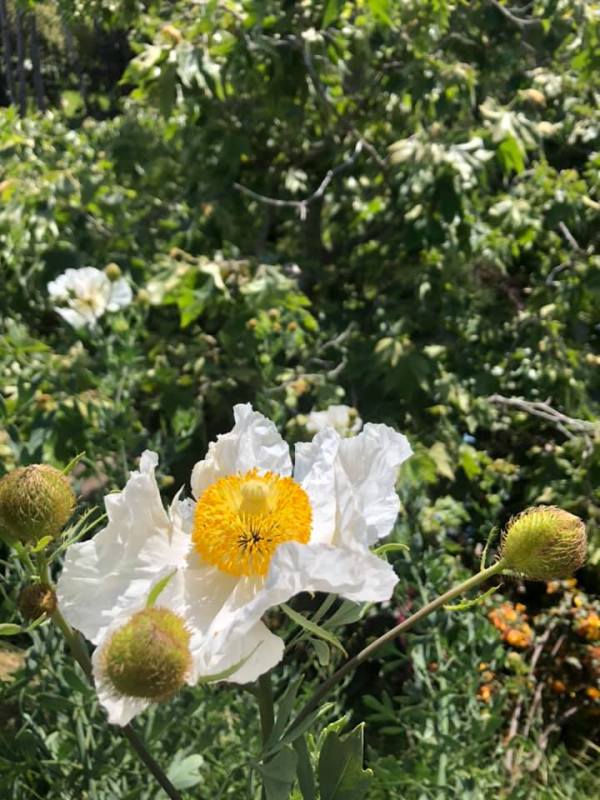
Matilija poppies with sycamore and fremontia in the background.
National Poetry Month: April 15, 2020 — Busy Bees
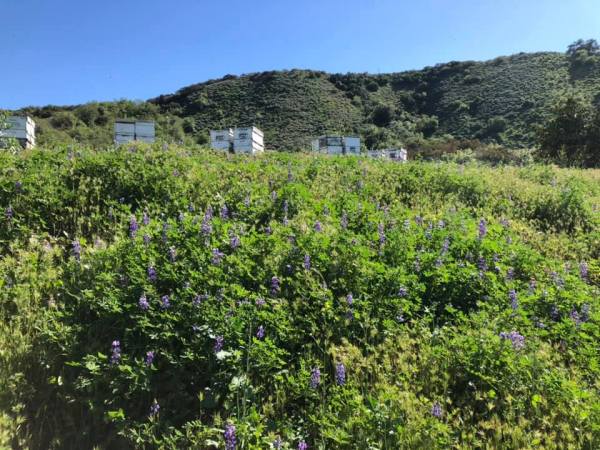
Lupine in bloom with bee hives above the Clos des Amis Estate vineyard on South Mountain, Santa Paula.
Busy bees buzz oblivious to our coronavirus concerns.
Oblivious to buzz, Cisco gets bee stuck on his snout; I flick off.
I am fortunate that vineyard work is considered essential, and that there are vineyards just a few miles from my home that need me to help prune and thin the vines inspiring today’s American Sentences. I write monthly about what I do and learn over on Wine Predator, and two days of American Sentences this April have also been inspired by my vineyard and cellar work here and here. Read more on Wine Predator about Clos des Amis, the winery where I have been working and learning.
American Beat Poet Alan Ginsberg came up with the idea of American Sentences: he says that an American sentence is like a haiku in that it has 17 syllables but it’s not three lines in a stanza but one line. As a haiku seeks to conveys an image that generates emotion and conveys a moment in time, the best Sentences do more than just offer a sentence in 17 syllables. I learned about American Sentences from Paul E. Nelson who I met at the Taos Poetry Circus in 2000; my friend who turned me on to the Baudelaire quote above I also met at Taos. According to Paul, the key to writing a good American Sentence comes from Ginsberg’s notion that poets are people who notice what they notice. He has been writing one a day since January 1, 2001. Learn more about American Sentences and how to write good ones from Paul here.
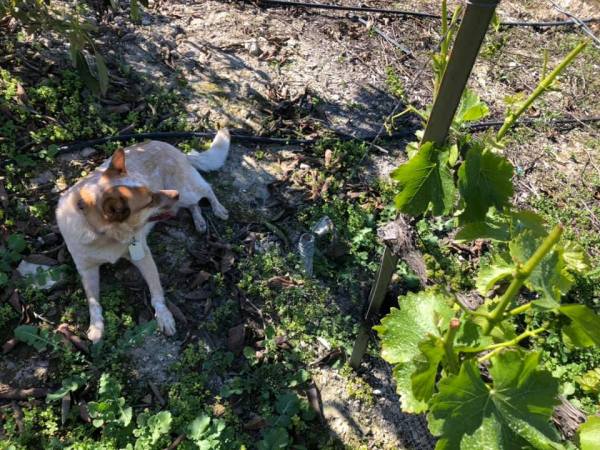
Cisco the Wonder Dog rests in the shade of a tangerine tree after doing battle with a bee. The grenache vines pictured have been chomped on by deer.
California to Kilimanjaro: Roof of Africa Journey Part 2

After waiting
and waiting
and waiting
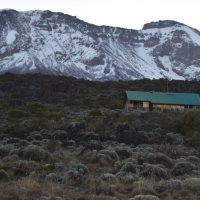
we finally started hiking from the entrance gate to Tanzania’s Kilimanjaro National Park up to 9000′ Mandara Hut. Read more…
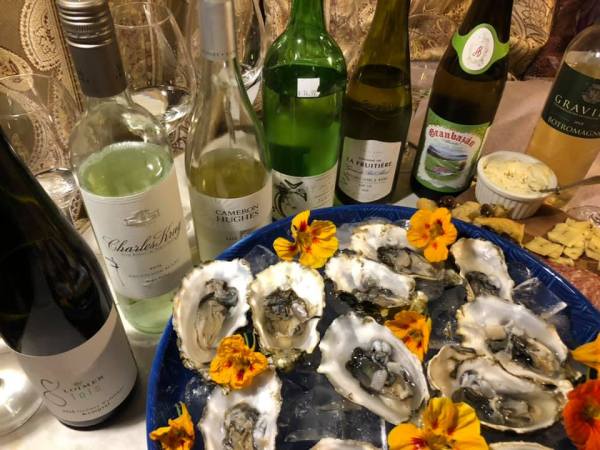
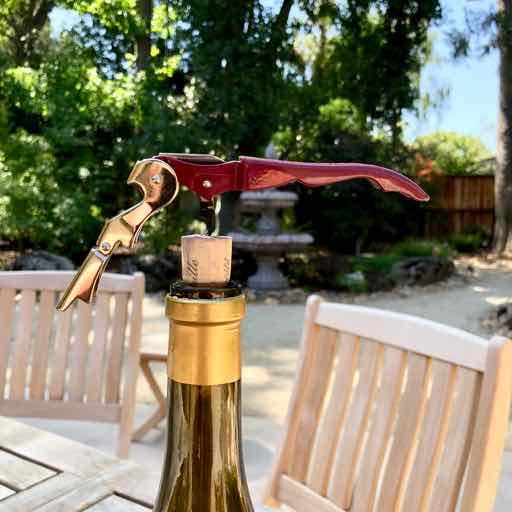
As time crushes you, bends you earthward, be drunk: with wine, poetry, earth.
Today’s American Sentence is inspired by this quote: Read more…
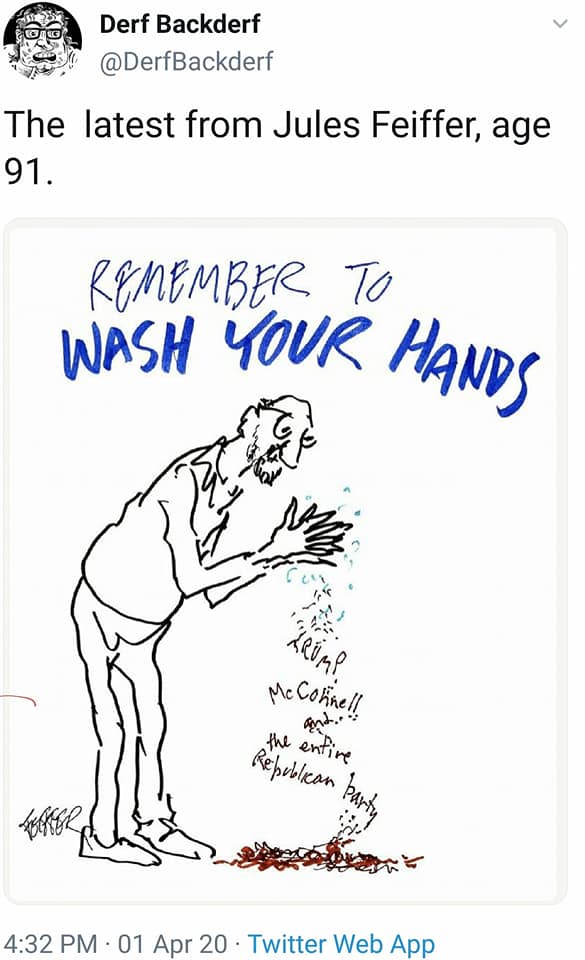
I’m rage sighing, no pants wearing, headed for electric chair eating.
Also: day drinking, toilet paper hoarding, weed pulling, cat walking.
Hand washing, hand washing, hand washing, hand washing.
What’s your coronavirusitis Monday Every Day Agenda?
April is National Poetry Month plus locked down with stay in place orders so I’m posting an American Sentence or two every day along with an image that reflects my experience during life in the time of the corona.
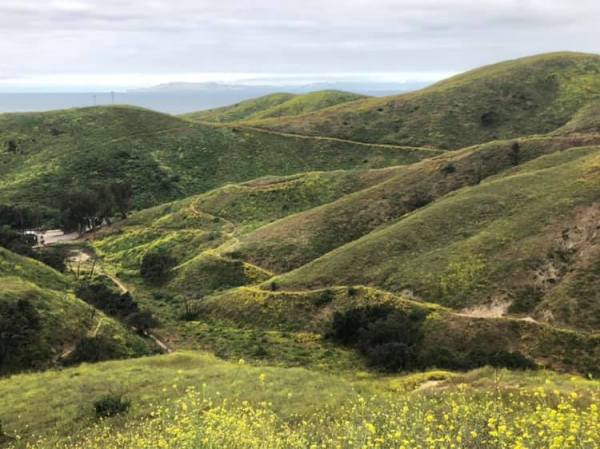
Today is the predicted peak day of COVID-19 in California. My agenda usually includes lots of outside time and exercise including traveling, skiing, walking, hiking, gardening, yoga, pilates, and Foundation Training. I’m fortunate that my home is near the beach, hiking trails, and the Ventura Botanical Garden.
But we are supposed to stay home and we are doing our best, and other than gardening, I’m just not doing much, not even my yoga practice. At least I’m doing my writing practice here with these American Sentences and writing about my travels plus lots of writing on my wine blog, and getting out and working in my yard.
It’s worth it. It seems we are flattening the curve. We’re doing it right in California. We’re saving lives.
According to today’s Press Play with Madeline Brand on KCRW, Read more…
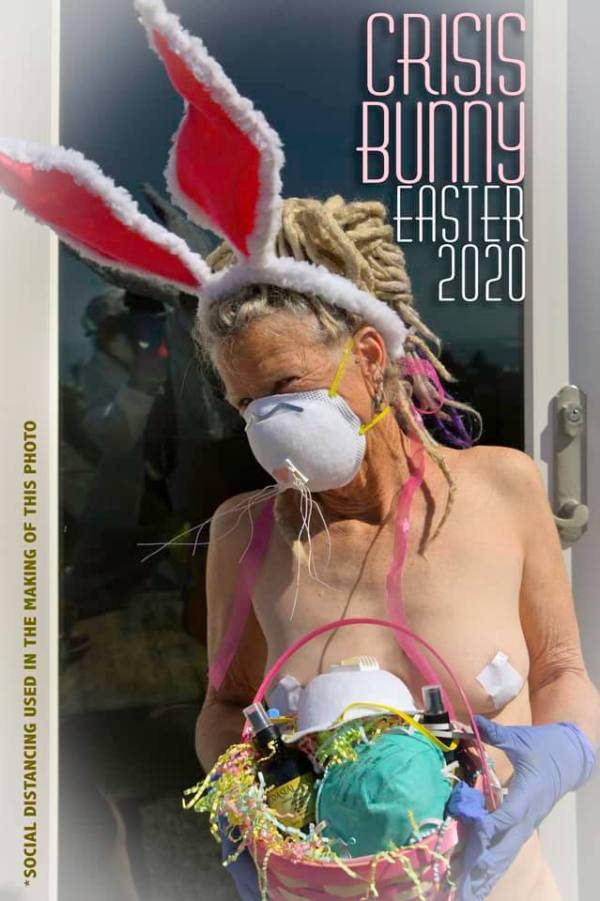
Crisis Bunny concept model: MB Hanrahan. Photo: Dina Pielaet.
Life in the time of corona: the Easter Bunny wears mask and gloves.
April is National Poetry Month. It’s also life during the time of the corona virus. So I’m posting an American sentence or two every day along with an image that attempts to document what it is like. Ventura Dina Pielet took this photo of Crisis Bunny (MB Hanrahan) carrying a basket of masks while wearing one along with gloves. This is part of a series that MB has created over the years, and many of them are collected in her book, Holidaze Cards. Read more…
National Poetry Month: April 11, 2020 — Covid Dreams

This covid couple sports handmade masks — they may not be proper but they serve the purpose! Felted handcrafted art and photograph by Borbala Arvai.
These days so bizarre it’s hard to separate dreams from reality.
April is National Poetry Month. It’s also life during the time of the corona virus. So I’m going to post an American sentence or two every day along with an image that attempts to document what it is like. The covid couple above is by Borbala Arvai; more of her work below. Read more…

Husserl says the world is yours to make on each and every occasion.
April is National Poetry Month plus locked down with stay in place orders so I’m posting an American sentence or two every day along with an image that reflects the sentence and my experience during this life in the time of the corona virus.
As I mentioned in my previous post, I am missing my walks in the world. But it is more than just the physical walk. It’s the mental walk too.
Henry David Thoreau reminds us: “As a single footstep will not make a path on the earth, so a single thought will not make a pathway in the mind. To make a deep physical path we walk again and again. To make a deep mental path, we must think over and over the kind of thoughts we wish to dominate our lives.”
What are the thoughts that dominate our minds? What have we planted in the soil of contemplation? What’s your American Sentence for today?
Allen Ginsberg came up with the concept — an American sentence is like a haiku in that it has 17 syllables but it’s not three lines in a stanza but one line, a sentence. As haiku seeks to offer an image that generates emotion and conveys a moment in time, the best Sentences do more than just be a sentence in 17 syllables.
I learned about American Sentences from Paul E. Nelson who I met at the Taos Poetry Circus in 2000.
According to Paul, the key to writing a good American Sentence comes from Ginsberg’s notion that poets are people who notice what they notice.
He has been writing one a day since January 1, 2001. Learn more about American Sentences and how to write good ones from Paul here.
Share your own American Sentence in the comments!
IMAGE with Thoreau quote is by Leslie Rinchen-Wongmo: “One of the only westerners trained in the rare Buddhist art of silk applique thangkas, she is passionate about the preservation and evolution of this Tibetan cultural tradition. His Holiness the Dalai Lama gave his blessings to Leslie’s work and encouraged her to make images that speak to the spiritual aspirations of people across religions and cultures. Leslie’s work is simultaneously traditional and contemporary, and her fascinating story is the subject of the acclaimed documentary film, Creating Buddhas: the Making and Meaning of Fabric Thangkas. Leslie mentors a select group of students around the world through her Stitching Buddhas Virtual Apprentice Program, and her Weekly Wake-ups provide a thread of inspiration to set your week on the path to awakening.”
The Latin phrase solvitur ambulando means “It’s solved by walking.”You be soul by walking; you create your world the way you walk in it.
During Covid, I miss making soul as I move through the world walking.
April is National Poetry Month plus locked down with stay in place orders so I’m posting an American sentence or two every day along with an image that reflects the sentence and my experience during life in the time of the corona.
I usually walk about 10 miles a week, Read more…















 art predator