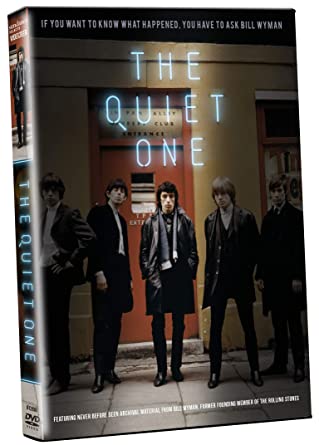
2019 Documentary: The Quiet One (Bill Wyman)
reviewed by Ron Wells
Some of the more notable facts are that he changed his name in 1964 from William George Perks, and he was brought up primarily by his grandmother who always believed he would one day be famous.
He mentions all three of his wives, and tells how he fought his first wife to get custody of his son. Glyn Johns and Andrew Loog Oldham are discussed, as is the death of Brian Jones. Wyman asserts that he was never addicted to drugs, but he did find escape through sex.
Perhaps the most interesting part of the film is when he talks about meeting his hero, Ray Charles.
by guest blogger Ron Wells
What’s the Point? The Point is Poetry!

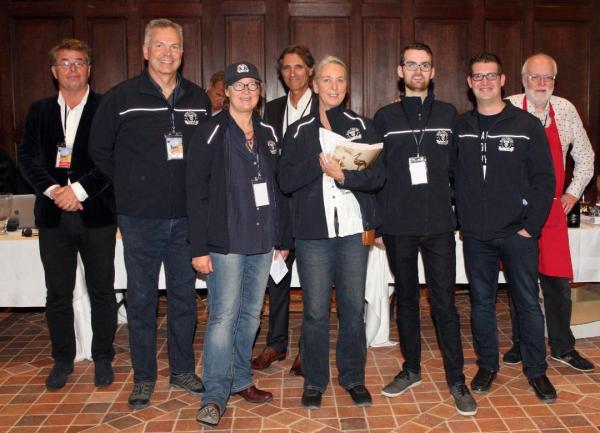
Team USA 2019 at the competition site Chateau Chambord; photo courtesy of the French US Consulate.
The point is not the point, the point is POETRY!And we all know what Robert Louis Stevenson said about wine, right?
“Wine is bottled poetry!”
I became a bit obsessed with points there for a bit trying to figure out how they would be calculated to determine who would be on the 2020 US Wine Team (read more here).

Read more about Louis Roederer Champagne and its American cousin here.
Cheers and congratulations to the 2020 US Wine Team!
- Kristen Shubert, Los Angeles County, CA
2016 Team USA: 3rd place with 100 points at World Challenge (with Ulf Palmnas)
2018 Team USA: 14th of 23 teams at World Challenge (with Lisa Stoll)
2018 US Open: 1st with 124 points (partner Lisa Stoll)
2019 US Open: 4th place
- Taylor Robertson, Texas
2019 Team USA: 30 points (with Sue Hill, Jacob Fergus, and I)
2019 US Open: 1st with 101 points (with Jacob Fergus) - Ulf Palmnas, Sweden
2016 Team USA: 3rd place with 100 points at World Challenge (with Kristen Schubert)
2017 Team Sweden: World Champion with 115 points; read more here - Lisa Stoll, Ventura County, CA
2018 Team USA: 14th of 23 teams at World Challenge
2018 US Open: 1st with 124 points (partner Kristen Schubert)
2019 US Open: 3rd place with 59 points - First Alternate:
Jacob Fergus, Texas
2019 Team USA Captain: 30 points at World Challenge
2019 US Open: 1st with 101 points.
Or more accurately, bottled poetry, AKA wine!

Read about these two wines in an expanded version of this post here.
I celebrate myself, and sing myself,And what I assume you shall assume,For every atom belonging to me as good belongs to you.
What’s Up: World Blind Wine Tasting Challenge 2020
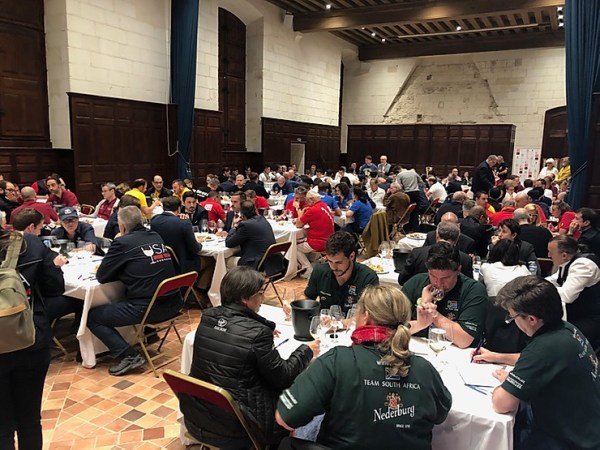
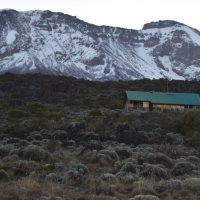
After posting daily American Sentences during COVID-19 in April plus a few posts about climbing Kilimanjaro (part 1 here, part 2 here, part 3 here), I took a hiatus in May and June, but now I’m back! I’m working on posts about Covid Camping and Travel as well as writing about previous trips because I don’t know about you, but this gal here, the Art and Wine Predator, is usually on the go traveling for ski trips, camping, mountain climbing, wine events, and music festivals! I’m getting a little stir crazy and I thought I’d be able to write about travel in May but it was too hard– it made me miss the Before Times even more.
So during the lockdown, I’ve focused on writing about wine over on Wine Predator. To date, I’ve published over 100,000 words in 68 posts averaging 1500 words in each and 12,000 page views over there so far in 2020.
Writing about wine and food definitely has its benefits:
- One, lots of wine samples to write about!
- Two, travel!
- Three, meeting new people with shared interests!
Yes, I do get sent “free” wine — but it’s not so free because I spend a lot of time researching, tasting, and writing about it. It’s not like I just sit around drinking and pontificating, and wines get photographed and the blog posts get written up by themselves.
It really is a lot of work — a labor of love for sure, with plenty of benefits.
One surprising benefit is that after tasting thousands of wines and writing about them, I discovered last summer that I’m really good at tasting wine blind. Even though I’d never done it before, last July I competed in the US Wine Open, a blind wine tasting challenge where the top two teams get sent to France to represent the US in the World Wine Tasting Competition!
And we came in second place with 91 points!
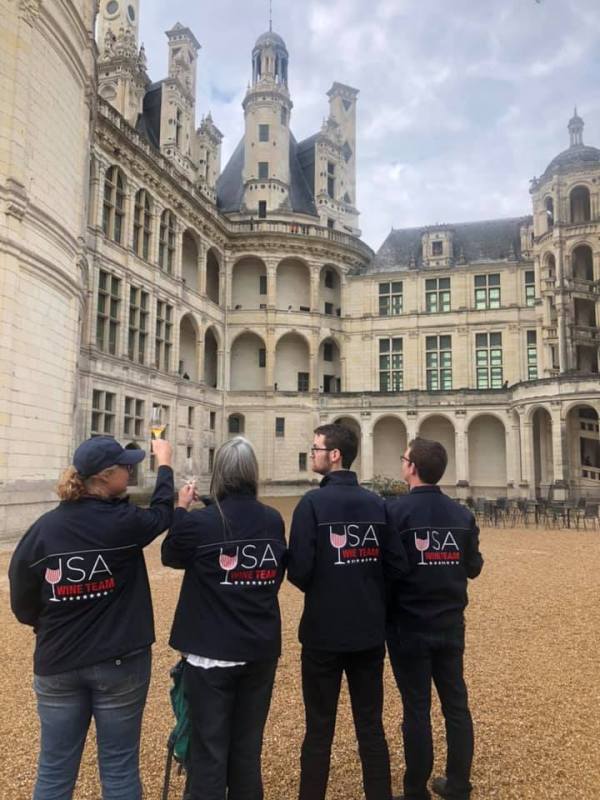
Team USA: Gwendolyn Alley, Sue Hill, Jacob Fergus, Taylor Robertson
That’s right: in addition to travel on media trips to Portugal, Canada, Washington, Oregon, and throughout California, I went to France on an all-expenses paid trip to compete in the World Blind Wine Tasting Challenge. While there, we spent almost a week in Champagne, and almost a week in the Loire, and finished our trip with a few days in Paris where we attended the famous Festival of the Vines.
While 92 points out of 100 may not sound like a lot, if we’d scored 70 in France we would have been in the Top 10. It’s that hard. Read how it went in France here.
And now the big question is: will there be a World Wine Tasting Championship in 2020? Who will be there? And will I be on the team again?

It’s not joy that makes us grateful; it’s gratitude that makes us joyful.
Art is disruptive: it solves a problem in a new creative way.
Godin: You’re your own client — build yourself a better body of work!
April 2020 lasted a lifetime or maybe more: COVID.
Today’s the final day of April.
May May last half as long.
As April was National Poetry Month, each day I wrote and posted one or more American Sentences… except for one or more days when I did not.
I may continue this practice for as long as we #SIP — Shelter in Place or Slurp in Place or Sigh in Place…
While I have been posting here, I have also posted 10 or so articles about wine on Wine Predator this month.
And I’ve been fostering kittens.
It’s been quite a month.
A month like no other.
It’s almost like GOD put us all on restriction.
Art by Leslie Rinchen-Wongmo, one of the few westerners trained in this rare Buddhist art of silk applique. His Holiness the Dalai Lama gave his blessings to Leslie’s work and encouraged her to make images that speak to the spiritual aspirations of people across religions and cultures. Leslie’s story is the subject of the acclaimed documentary film, Creating Buddhas: the Making and Meaning of Fabric Thangkas. Leslie mentors a select group of students around the world through her Stitching Buddhas Virtual Apprentice Program, and her Weekly Wake-ups like this one above provide a thread of inspiration to set the week on the path to awakening.
National Poetry Month 2020: April 29 — Whiskers R We
For National Poetry Month 2020 I am writing one or more American Sentences and sharing them here.
A week ago we became foster kitty parents. This is making it simultaneously easier and harder to accomplish my goal.
It would seem easy but no. Unless you tag team you do not get enough sleep. Moms and some dads, you know what it is like to nurse an infant. I really don’t know how I did it.
And it is inspiring yes and I count the 17 syllables for the day’s American poem and find many BUT but unless you are William Carlos Williams or Eileen Myles or Scott Vetsch with a small notebook and pen in your coat pocket well… you lose the poems. Poof. Just. Like. That.
But there’s more where they come from.
There are an infinite number of poems.
Kind of like love — you can never love too many kittens.
National Poetry Month 2020: April 28 — flowers in bloom

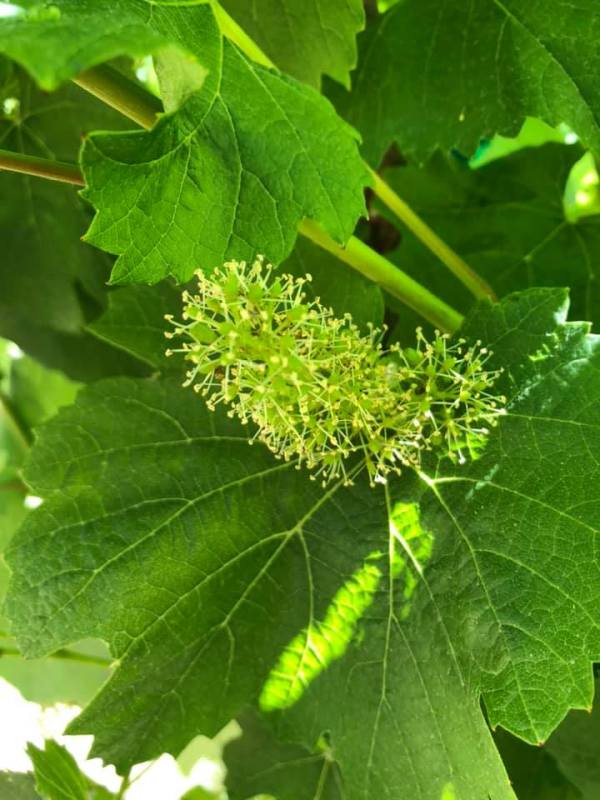
Flowers — iris, chardonnay, matilija poppies– brighten the day.
Today’s American Sentence is inspired by my time outside — this morning stopping to smell the iris damp with dew, then three hours in the vineyard removing suckers and marveling at the prolific chardonnay vines at Olivelands Vineyard near Santa Paula, and finally pulling weeds at home alongside the matilija poppies I planted over 20 years ago on the hillside.
I was supposed to get a lot of writing done today– I’d planned to get part four of my California to Kilimanjaro series up today — but as you may have noticed, a week ago, I took in three kittens to foster. They may look cute but they need a lot of attention– they needed to be bottle fed every 3-4 hours when we first got them and now they need to be fed every 6 hours — but in a huge win they are starting to feed themselves more and more!
Stay tuned for more Kilimanjaro!

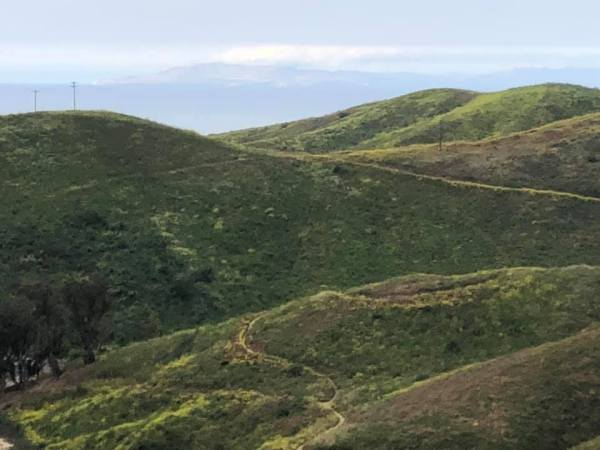
The Santa Barbara Channel islands from Arroyo Verde park in Ventura CA
Where I’m calling from: Borchard Street bookmobile where the dust fairies dance.
National Poetry Month 2020: April 25 — Love what is lovable


National Poetry Month 2020: April 24 — Both pull you down
What Covid-19 and gravity have in common: both pull you down.
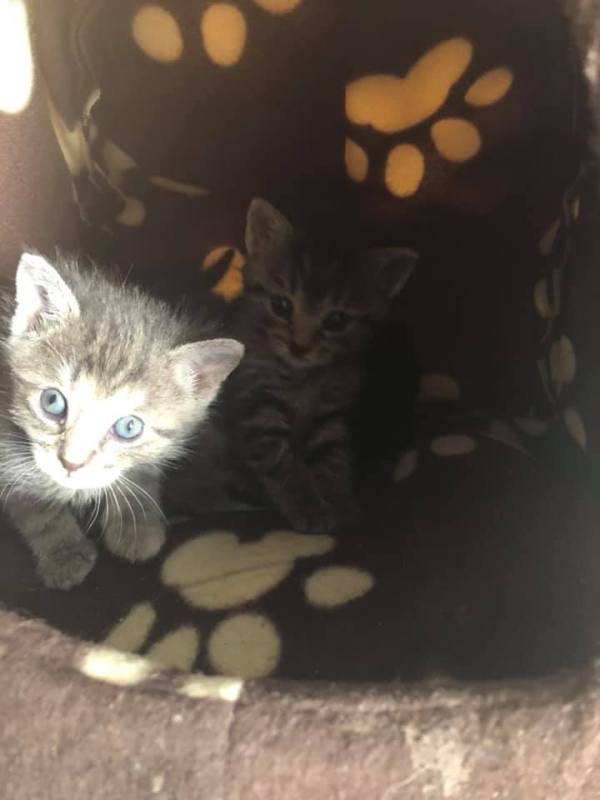
National Poetry Month 2020: April 23 — COVID KITTENS!
Everyone needs cute kittens to keep them company during Covid-19.
Who wants to help bottle feed these four week old foundlings every five hours?
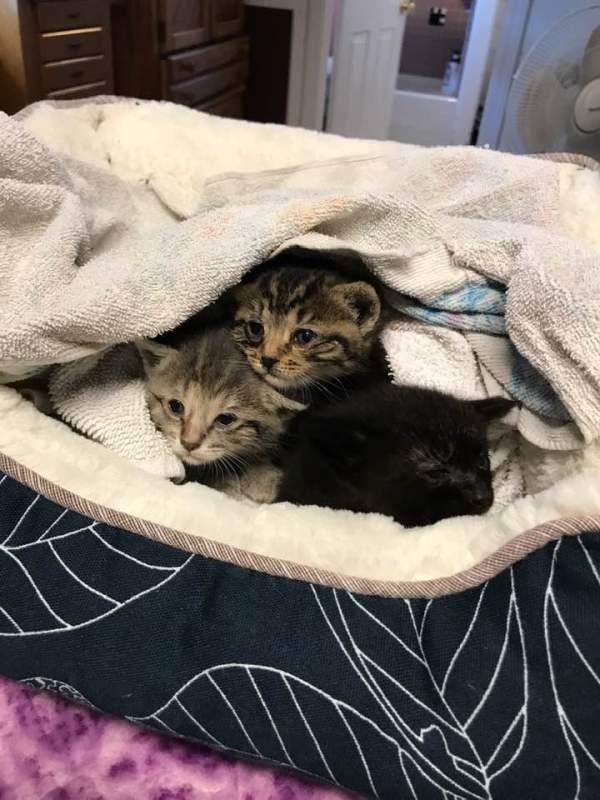
We’ve fostered kittens before and put the word out months ago that we were available again. On Tuesday, April 21, we were asked by the Foundling Kitten Society if we could take on three kittens that had just turned four weeks old. They were small, malnourished, and sick with an upper respiratory infection.
In short, a handful.


But my teen promised to help, and my husband was amenable as long they stayed FOSTERS and so we off went to pick them up and get a refresher course on bottle feeding and dealing with the infection. We’d had kittens before that we thought we might have to bottle feed but they took to the food we offered– they were hungry!
Bottle feeding three kittens sounds fun and reasonable until you’re the one staying up until 2am or waking up at 3 or 4 or 5am to find them; it takes almost an hour to prepare the food and feed all three, and clean their faces too.
I’m happy to say that these three are thriving so far. Their eyes are clearing up, they’re putting on weight, an the vet yesterday said they were doing great with normal temperatures. Dr Sisk gave us some more tips and tried to recruit us for the Ojai Valley Humane Society’s brand new kitten foster program; check it out here. They had it all set to start when everything was shut down due to Covid-19. They as well as Ventura County Animal Services can’t do adoptions and groups like the non-profit Foundling Kitten Society are stepping in to the fill the gap.
How you can help NOW: if you have any experience fostering kittens, especially bottle feeding them, now’s the time to step forward. If you can provide a safe harbor for an adult kitty, fosters are needed for those as well.
MAKE A DONATION! Taking care of these kitties takes a lot of time energy, and money.
How you can help later: Sign up to learn how to foster!
NOTE: April is National Poetry Month so every day I’m writing one ore more American Sentences about life in the time of corona. American poet Allen Ginsberg came up with the idea as an American version of a haiku. Like a haiku an American sentence is 17 syllables. I learned about American Sentences from Paul E. Nelson who I met at the Taos Poetry Circus in 2000. According to Paul, the key to writing a good American Sentence comes from Ginsberg’s notion that poets are people who notice what they notice. He has been writing one a day since January 1, 2001.
Learn more about American Sentences and how to write good ones from Paul here.