Jane Goodall: “The greatest danger to our future is apathy”
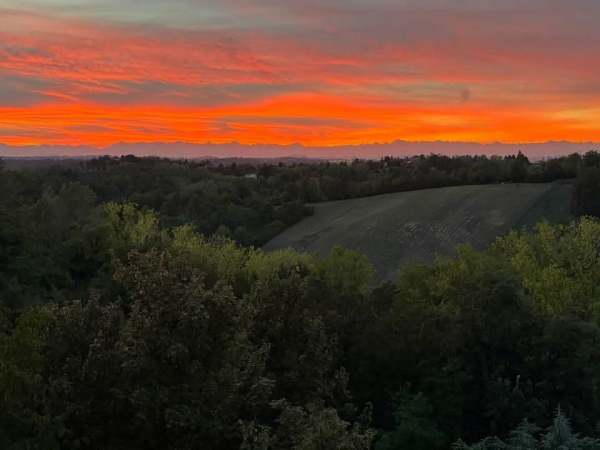
Alps view with hazelnuts and vineyards from Monferrato, Piemonte, Italy
“Never a day passes but that I do myself the honor to commune with some of nature’s varied forms,” reports George Washington Carver.
In his book Last Child in the Woods, Richard Louv describes “nature deficit disorder.” We have a hole in our lives, a deficit. Where nature used to be, we fill in that hole with social media, screen time, playing video games instead of climbing trees. He argues that humans need to get outside into nature where we can explore and play and connect with the land, grow plants, and observe animals.
Our lack of time in nature has led to our lack of caring for nature — for the planet and for all that lives here. If you don’t really know or understand something it is hard to care about it.
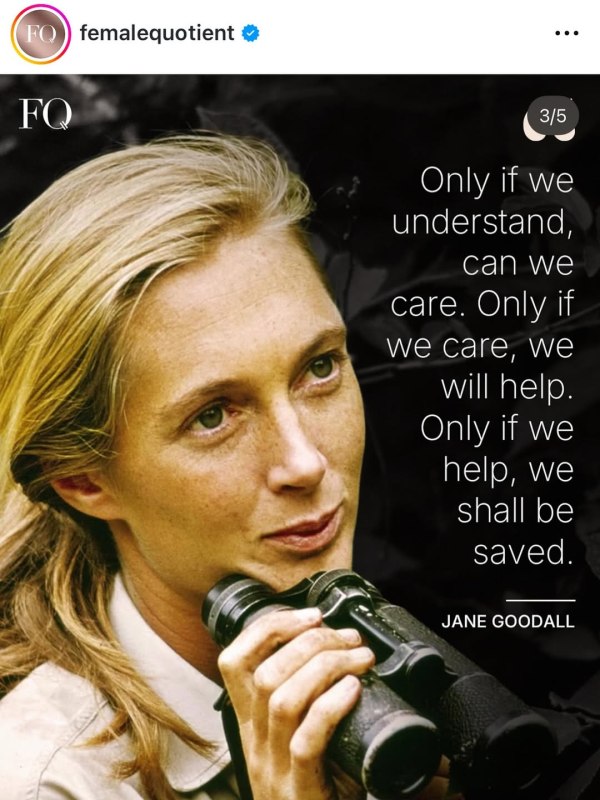
young Jane Goodall
How do we bridge the gap? How do we get people to care? Someone who was really effective at that was Jane Goodall, who died last October. She points out that in understanding, we care, and if we care, we can help. By helping, we will all be saved.

Jane Goodall hope
As I wrote here on the day she died,
Amid flooding and wildfires, impassivity and eco-grief, the question she was asked most often was “Do you honestly believe there is hope for our world?” She did. Hope, she argued, is not merely “passive wishful thinking” but a “crucial survival trait.” She noted, “If you don’t have hope that your action is going to make a difference, why bother to do anything? You just become a zombie.” Read more from the interview in New Yorker Magazine: https://newyorkermag.visitlink.me/puCKxb
That’s why I have my students do problem-solution-action research projects. In Pedagogy of the Oppressed, Paulo Freire proposes teachers bring “problem posing” into the classroom. Freire argues that students have real questions for which they want answers, real problems to solve, real ideas to explore. He encourages teachers to move from a transmission style of teaching to a transformative one that provides students with opportunities to change their world. To do so, he suggests a process of naming, reflecting, and acting on the real-world problems we face today.
What do you care about? What are you concerned about? What is an environmental problem that you might tackle? Do you need nature?
Your action could be as simple as planting wildflower seeds that support beneficial insects like butterflies or bees or that feed hummingbirds.
Or as elaborate as organizing and creating a human banner like Brad Newsham organizes at Ocean Beach in SF and other places like we have done in Ventura (read more here).
While beach cleanups are great, more plastic arrives on the next wave, suffocating sealife. How can we change our behaviors to use less plastic? And to properly recycle what we do use?
In addition to ocean pollution, there’s air pollution and light pollution too!
There’s so much to do– and so much you can do! In fact deciding which specific problem to address and how can be the hardest part. Important to be as specific as possible– to make the connection between the problem and the action.
Following Freire’s model, begin by identifying, researching, and naming a problem. Next, research and reflect on solutions. Finally take action and evaluate what was accomplished. How can you share and present your results?
We can’t all be Jane Goodall. But it is up to each of us to carry on her important work. In addressing our own apathy, we make the world a better place.
And speaking of…
THURSDAY, OCTOBER 22
From Student to Changemaker: Turning Community Care Into Action
- Connect with local organizations and learn about volunteer, leadership, advocacy and partnership opportunities.
- 10 a.m. – Noon
- ASC-150 Ventura College
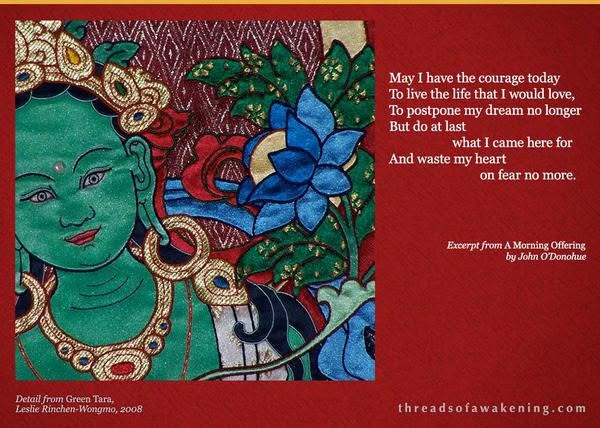
quote with art by Leslie Rinchen-Wongmo
Discover more from art predator
Subscribe to get the latest posts sent to your email.