Getting Your Nature Fix/d
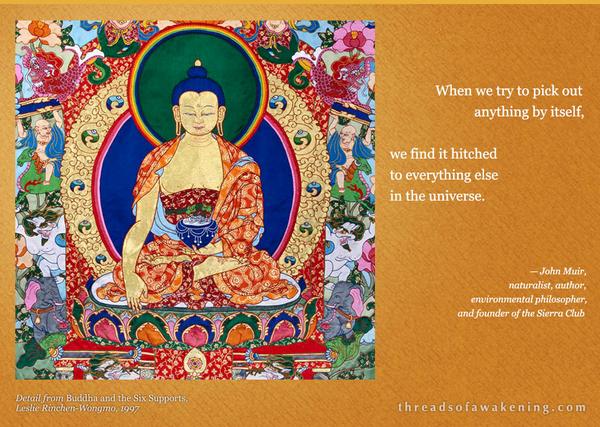
Muir: everything is hitched to everything else
“When we try to pick out anything by itself,” said John Muir, “we find it hitched to everything else in the universe.” And that can make environmental problem solving a problem! How do you untangle and choose what to do to make the situation on our planet better without getting overwhelmed? Are you getting enough NATURE in your life?
Yes, Nature! (click here to see all 3 Nature Rx videos)
Believe it or not, there’s lots of scientific evidence to support the importance of getting out in nature, and there’s several books about the topic. Doctors are prescribing NATURE as reported in this PBS Newshour Video.
“Most learning is not the result of instruction. It is rather the result of unhampered participation in a meaningful setting.” Ivan Illich, author of Deschooling Society (1971)
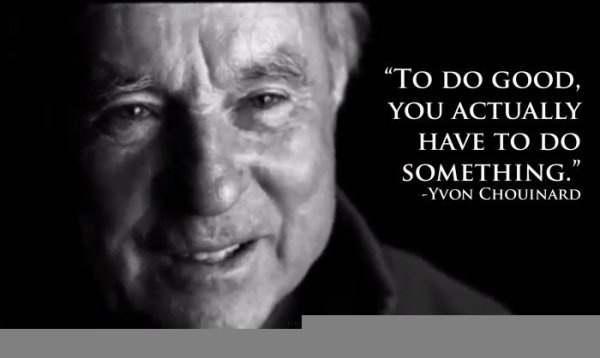
Sometimes it can be hard to get motivated, but let nature help because, as Yvon Chouinard points out, “To do good, you actually have to do something.”
In particular, I am concerned that we need to disconnect with technology in order to connect with nature, other species, and with each other, in order to care about and save our planet from climate change and pollution. Too many feel lost in the world of technology– and the way it is dehumanizing.
Connecting to place, I would argue, is part and parcel to being human, and is as important to us and our survival as a species as is our connection to each other.
In my classes this week, we are exploring people and place as we move into the research paper and Earth Action Projects. As an avid reader, I am drawn to texts that explore our world and our connection with it. I love these two, and have taught them when they were included in our course reader and miss them from the current edition:
- N. Scott Momaday: “Way to Rainy Mountain” where he writes about the place of his ancestors, the Kiowa; I love the entire book and have taught it in the past — this is a link to the prologue
- Charles Simic “A Reunion With Boredom” where he writes about what happens when the power goes out
I’ve written a lot about the environment here on Art Predator. Here are three that stand out:
Read more about plastic pollution in the ocean and “Running the Numbers.”
Read more about plastic pollution from Chris Jordan and “melting the ice int he heart.”
Read more about Climate Change: “But it’s worse than that.”
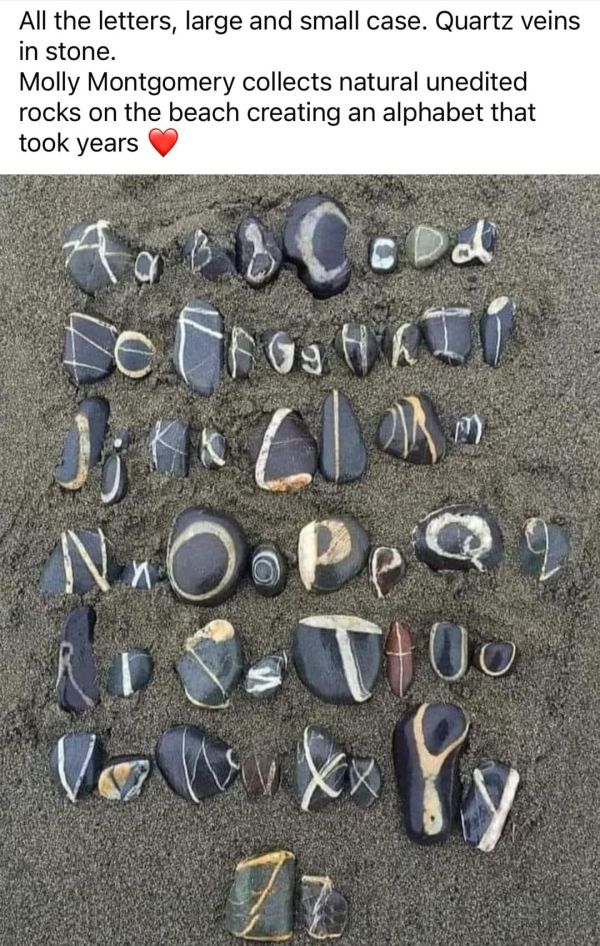
rock alphabet
So pick up a rock and pick out some words and get to work! I’ll join you! Let’s go!
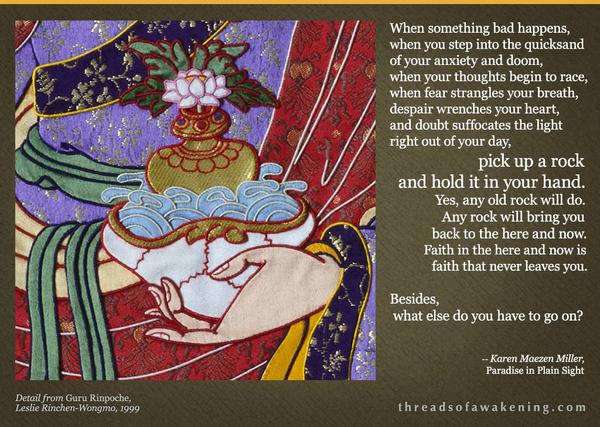
pick up a rock
Art at the start and close by Leslie Rinchen-Wongmo, a textile artist, teacher, author of Threads of Awakening: An American Woman’s Journey into Tibet’s Sacred Textile Art (book trailer here), and one of few non-Tibetan artists of silk appliqué thangka.
Discover more from art predator
Subscribe to get the latest posts sent to your email.
















 art predator