Borderlands: Sending Loving Kindness To The Crossroads

Love all the parts
“Send loving kindness into the elbow. Don’t be embarrassed to have this much love for some part of yourself,” says Stephen Levine. We don’t always love all of ourselves. While it’s not usually an elbow, we are often embarrassed by this or that part of ourselves. We judge ourselves. And we don’t always judge ourselves kindly or with loving kindness.
We also judge others, (that was one of the things I admired most about my sister– she was so non-judgmental) and our prejudices influence the language choices we make. As we reflect on our words we use in the world, we should consider:
- what are our expectations,
- what our assumptions, and
- what are our differences?
This week, my students and I have been reading and reflecting on language and style as well as essays by women about their experiences in the world including Gloria Anzaldua’s “How To Tame A Wild Tongue” and Amy Tan’s “Mother Tongue.”
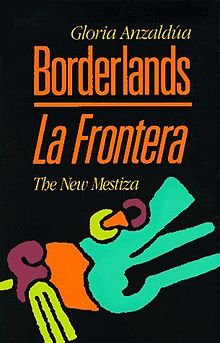
Today we’ll look at Gloria Anzaldua’s poem “Borderlands” which offers ideas for how to understand our expectations, our assumptions, and our differences between us and within us– and for a way to send loving kindness to every part of ourselves.
To live in the Borderlands means you
are neither hispana india negra española
ni gabacha, eres mestiza, mulata, half-breed
caught in the crossfire between camps
while carrying all five races on your back
not knowing which side to turn to, run from;
To live in the Borderlands means knowing
that the india in you, betrayed for 500 years,
is no longer speaking to you,
that mexicanas call you rajetas,
that denying the Anglo inside you
is as bad as having denied the Indian or Black;
Cuando vives in la frontera
people walk through you, the wind steals your voice,
you’re a burra, buey, scapegoat,
forerunner of a new race,
half and half—both woman and man, neither—
a new gender;
To live in the Borderlands means to
put chile in the borscht,
eat whole wheat tortillas,
speak Tex-Mex with a Brooklyn accent;
be stopped by la migra at the border checkpoints;
Living in the Borderlands means you fight hard to
resist the gold elixir beckoning from the bottle,
the pull of the gun barrel,
the rope crushing the hollow of your throat;
In the Borderlands
you are the battleground
where enemies are kin to each other;
you are at home, a stranger,
the border disputes have been settled
the volley of shots have shattered the truce
you are wounded, lost in action
dead, fighting back;
To live in the Borderlands means
the mill with the razor white teeth wants to shred off
your olive-red skin, crush out the kernel, your heart
pound you pinch you roll you out
smelling like white bread but dead;
To survive the Borderlands
you must live sin fronteras
be a crossroads.
gabacha: a Chicano term for a white woman
rajetas: literally, “split,” that is, having betrayed your word
burra: donkey
buey: oxen
sin fronteras: without borders
This video might be of interest.
Questions and concepts for your consideration:
- Why does Anzaldua use different “tongues”?
- What does Anzaldua mean that we “must live sin fronteras/be a crossroads”?
- How does the idea of a “Borderland” describe a variety of psychological states, and positions within a society?
- In her essay “The Path of the Red and Black Ink” from Borderlands: La Frontera, Gloria Anzaldua explains, “I write the myths in me, the myths I am, the myths I want to become.” What does she mean?
- How can we use language, experiences, stories to build a common ground between and within us?
What cultures are you made of? What crossroads do you stand in?
Do you know what it’s like to live in the borderlands?
Below is one writer’s response to Gloria Anzaldua’s poem. What’s yours?
Discover more from art predator
Subscribe to get the latest posts sent to your email.














 art predator