James D. Houston Nov. 10, 1933-April 16, 2009 : mentor, friend, novelist, essayist
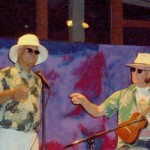 About the same time W.S. Merwin was announced as the winner of this year’s Pulitzer Prize, I wondered if something had happened to another of my favorite writers, novelist and essayist Jim Houston. Searches for him and “cancer” brought people to my blog almost two weeks ago, then my former husband sent me an email which confirmed the sad news. Today I went to Al Young’s blog and read REMEMBERING JAMES D. HOUSTON.
I was a student of Jim’s at UC Santa Cruz; I had my first class with Jim sandwiched between my first quarter there with Al Young and the following quarter with Page Stegner.
The class focused on fiction. I was working on a novel about hiking the Pacific Crest Trail, and Jim was very encouraging. He knew a lot about the state and its natural history.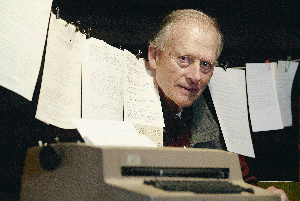
For class each week we’d workshop one or two people’s stories, discuss literature, and talk about writing process. Often we held class in his house near the beach in Santa Cruz, and he showed us his studio where he wrote standing up because his back hurt. When I stand to write, I always think of him. At his house, we drank wine–he was a big fan of Ridge wines and was amazed that I had worked there. For class, we read the collection Best American Short Stories which had been edited by Ray Carver and had recently been released. Jim had arranged for Ray to visit our class, but that was changed with the news of Ray’s serious illness from cancer. Most of us in the class traveled to Stanford to hear Ray read.
As a teacher, he was gentle, generous, and honest. He had a great laugh, and he really had eyes which twinkled when he smiled. His deep love and respect for his wife was inspiring. I was fortunate to have him as a teacher, a mentor, a friend.
In late August 2006, I saw he was giving a workshop and I wrote to the organizers to say I’d love to attend and to tell Jim a former student says hi. In September 2006, Jim emailed me, asked me about my life, and how my writing was going. We kicked around the idea of having him come read at the college where I teach but it didn’t come to pass. I wish now I’d tried harder to make that happen.
I did send him this poem which I’d written during the 3:15 experiment a few weeks before we reconnected:
Tuesday August 8, 2006 315am
The train cars crash
into each other on the tracks
It’s unnerving tonight
like it is on my head
sweeping past my cheek
through my ears
out my mouth
across my eyes
until the
house & I
stop shaking
faint rumble of
engines now
try horn of train
now horn now whistle
what do they call
this electronic noise
the engineer makes
any more?
Now steady beep beep beep
something somewhere
warns as it
backs up
breath alternates
first the child’s drawing in then
the father’s blowing out
I was dreaming of James and Jeanne Houston
of their writing of her writing
I was hearing it read in my dream
It was so beautiful elegiac
I wanted to possess these words
I was going to
there was snow
words held fire
they were solid like rocks
I was going to be able
to hold them the words like
stones in my hand
I can feel the weight
of them in my palms
soft grey stones not
unlike dove a soap
a chocolate the words
from one mouth into
anothers you can
suck on a stone
when you need to
for sustenance
for comfort
moth walks up the wall
Its wings flutter a tutu
the baby’s breath
the ocean
this night at 315
the ocean
the ocean
So enough about me and Jim Houston. For more poetry, check out Read Write Poem. For more about James Houston, continue!The first place I went to to prepare this post was the blog of Jim’s close friend, the poet, novelist, and essayist Al Young, California State Poet Laureate emeritus. Al’s blog provides links to books, reviews, and other essays about Jim, his life and his work.
So now, go to Al’s blog to check out what others have had to say about Jim’s writing and his passing…and to start, here’s a review of Jim Houston’s book which includes two lovely passages, one of them about the earthquake which occurred when I lived in Santa Cruz:
As acute observer of the state’s lures and long a resident of Santa Cruz, located in what is one of California’s truly geography-blessed region, it could be he has come close, within this collection, to suggesting that the famously bedazzling light may be one reason his birthplace has always drawn devotees:
“A lot depends on the light here. It shapes the mountains and draws a mossy green from those high meadow patches that never turn brown . . . It catches eucalyptus leaves with their undersides up, like a thousand new moons.”
If quality of light is said to inspire artists, might not such unique glow serve also to focus the sensibilities of more plebian pilgrims – the humble masses? Perhaps, but many, many more – like the author’s parents and my own – were drawn not to gawk at scenery, sunbathe, or exclaim at the light and the roiling Pacific Ocean but to get jobs, for such were scarce to non-existent in the bleak, sad, played-out places which our respective elders determined to flee in the crisis times of the 1930s-40s.
In describing the 1989 Loma Prieta earthquake that challenged and roiled the region, Houston makes clear that his town of choice is comprised of more than such fine views. Though outsiders might perceive a certain level of feyness within the populace, it seemingly co-exists with the qualities required for rebounding and re-building after the “most ruinous disaster in its history.
“Buildings fall, but the spirit does not die. Half the downtown is in rubble. And I grieve for what has been lost, the lives lost, the links to heritage and history. . . but the buildings themselves came later. First there was the place itself. . . I believe the spirit resides right there, in the continuing dialogue between a place and the people who inhabit it.”
Discover more from art predator
Subscribe to get the latest posts sent to your email.
















 art predator
very interesting