Nature RX “Wild on Humans” with Dr. Jane Goodall RIP
RIP Jane Goodall: “The greatest danger to our future is apathy.”
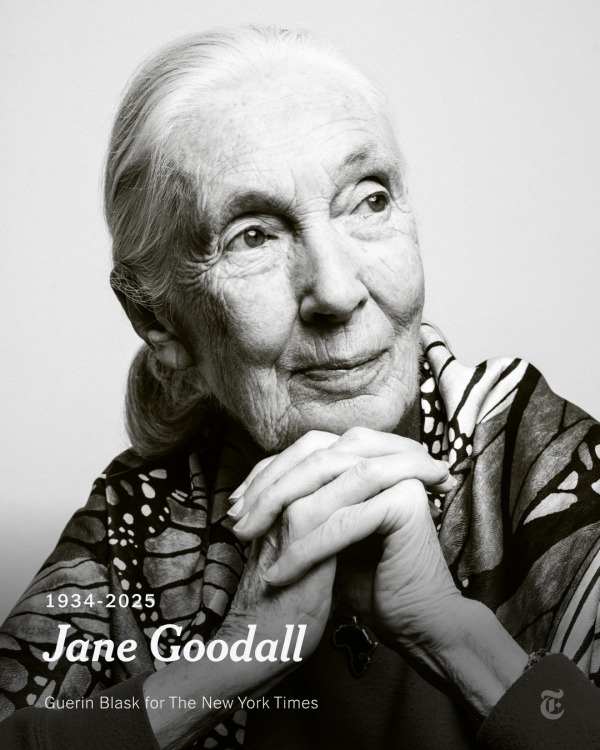
Jane Goodall by Guerin Black for New York Times
Today October 1, 2025, we lost someone who was truly wild for nature: Jane Goodall.
Today, Dr. Jane Goodall planned to join students and staff at EF Academy Pasadena Campus in Southern California “to share her passion for protecting and restoring nature with local students, who are kicking off an initiative to plant 5,000 trees to replant what was lost during the Eaton Fire.” They carried on without her, and we can too.
The New Yorker Magazine writes on Facebook: “Jane Goodall, who died today, at 91, spent much of her later years travelling around the world to speak about the climate crisis. Everywhere she went, she met young people who were “angry, depressed, or just apathetic, because, they’ve told me, we have compromised their future and they feel there is nothing they can do about it,” she writes in “The Book of Hope: A Survival Guide for Trying Times.”

Jane Goodall hope
Amid flooding and wildfires, impassivity and eco-grief, the question she was asked most often was “Do you honestly believe there is hope for our world?” She did. Hope, she argued, is not merely “passive wishful thinking” but a “crucial survival trait.” She noted, “If you don’t have hope that your action is going to make a difference, why bother to do anything? You just become a zombie.” Read more: https://newyorkermag.visitlink.me/puCKxb
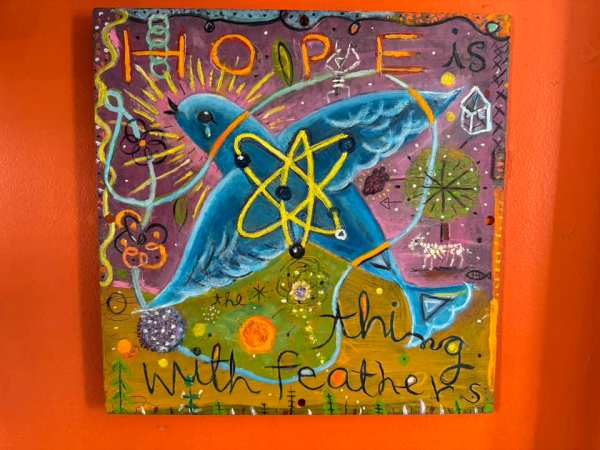
Hope by Dianne Bennett: see her show at La Luz in LA opening 10/3 and at the Highway 62 open studios show in Joshua Tree this weekend and next
Well, Emily Dickinson wrote that “Hope is the thing with feathers.”
And I invite you to stay hopeful — and celebrate World Migratory Bird Day — where ever you are!

world migratory bird day

migrating birds September 30, 2025
Jane Goodall
-
Plan bird-friendly cities: protect habitats in urban development.
-
Plant native plants: provide food, shelter, and support pollinators.
-
Prevent collisions: use bird-safe glass or window films.
-
Dim the lights: reduce nighttime light during migration.
-
Avoid pesticides: choose organic methods to protect insects and water.
-
Say “No” to plastic waste: prevent ingestion and entanglement.
-
Keep cats away: keep cats indoors, leashed, or in enclosures.
-
Educate & advocate: raise awareness and support bird-friendly policies.
So if not birds, what animals would you like to help? how might you help take care of our planet? how can you take action about the climate crisis?
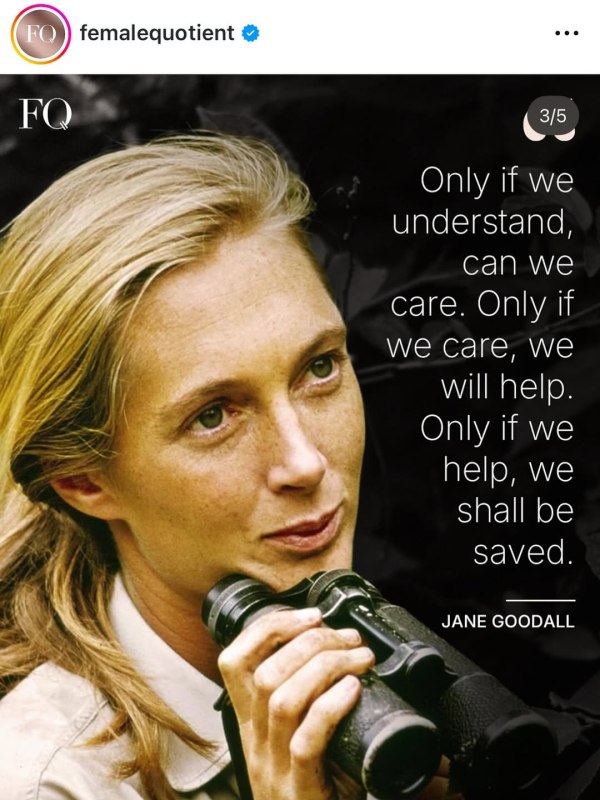
young Jane Goodall
There are plenty of opportunities — and plenty of non-profit groups looking for volunteers to help.
The first step, of course, is to care— to want to do something. Has technology ruptured our connection with our planet to the extent that we know longer care what happens?
What about an ad campaign to get people into NATURE?
Discover more from art predator
Subscribe to get the latest posts sent to your email.
















 art predator